
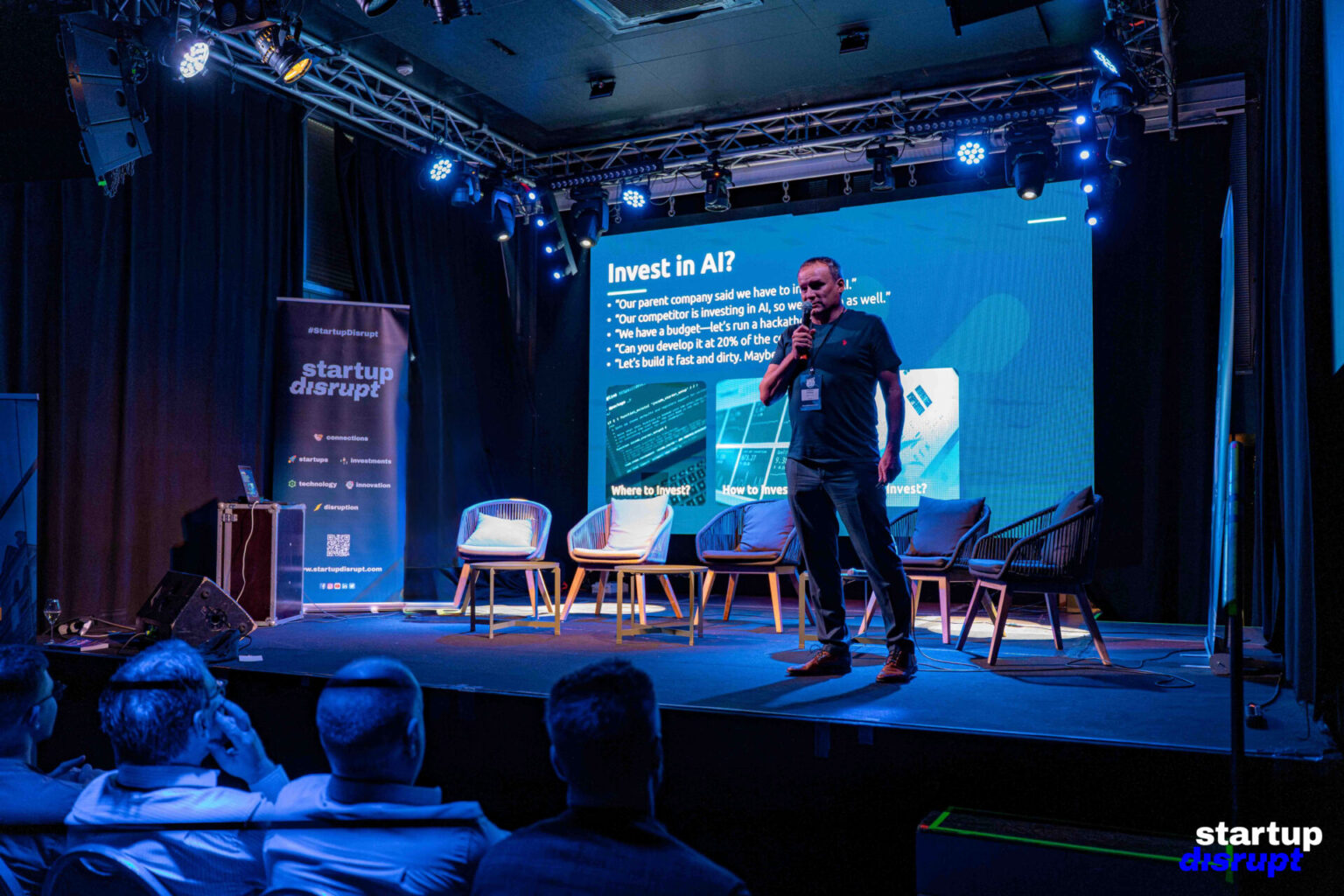
At Investment Boat 2026, Ladislav Ruttkay, Founder of Meta IT, challenged one of the most common assumptions around enterprise AI: that investing in AI simply means buying licenses, paying for tokens and launching a few pilots.
His keynote focused on a more important question:
Where should companies actually invest if they want AI to create measurable business value?
Ruttkay structured the discussion around three questions: Where to invest? How to invest? And why invest?
1. Where should AI be used?
Before selecting a model or buying another AI tool, companies should first identify which processes are actually suitable for AI.
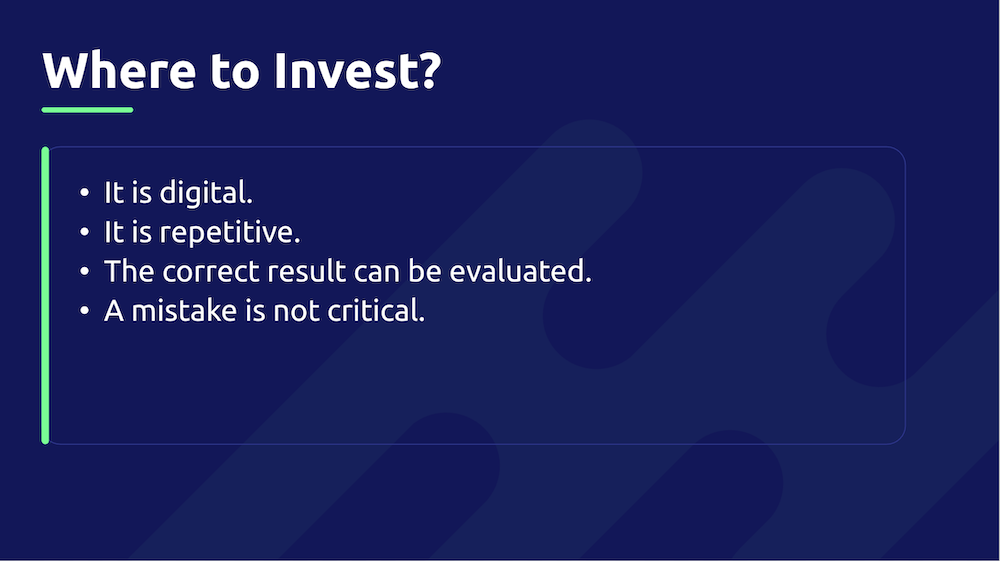
The point is simple: companies should not start with “Where can we add AI?”
They should start with:
“Where can AI create measurable value without introducing unacceptable risk?”
That distinction matters, especially when AI becomes a board-level priority or simply another corporate buzzword.
2. AI investment is much broader than tokens
The most visible AI costs today are licenses and model usage.
But Ruttkay argued that serious AI investment can take several forms:
Tokens and licenses — cloud services, APIs and AI tools.
On-premises models and hardware — relevant when companies need more control over infrastructure, data or costs.
Models developed or trained in-house — useful where proprietary data or specific business processes can create competitive advantage.
People — perhaps the most underestimated part of the equation.
Technology alone does not create value if employees and customers do not know how to use it properly.
During the keynote, Ruttkay described a client project where users complained that an AI solution was not working. After reviewing the queries, the problem turned out not to be the technology itself, but how people were interacting with it.
The lesson:
AI adoption requires investment in skills and behavior, not only software.
3. Why are we investing?
The third part of the framework may be the most important.
Meta IT proposed three questions companies should ask:
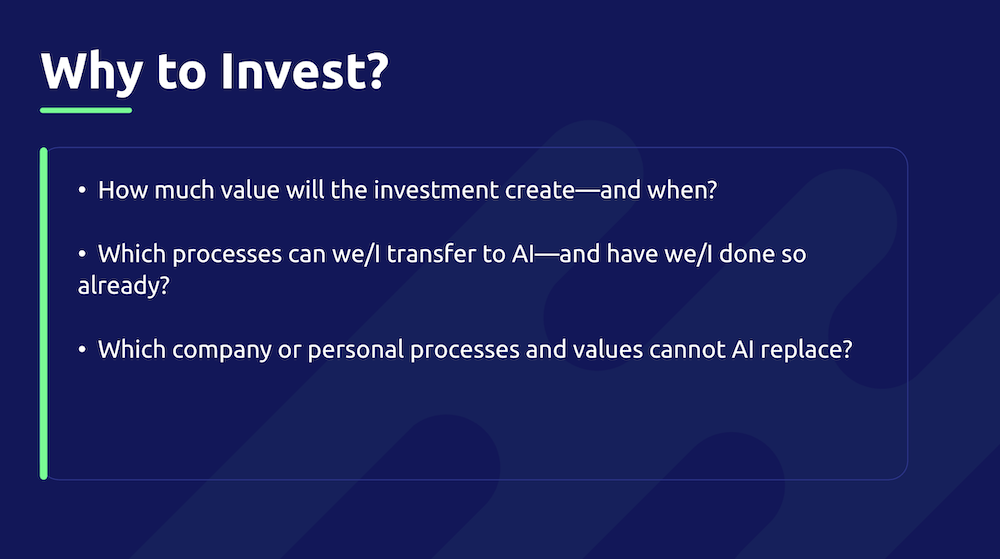
These questions force management to move beyond experimentation and think about ROI, execution and strategic relevance.
A company spending heavily on AI is not necessarily investing successfully.
If productivity, margins, customer experience or decision-making do not improve, AI may simply have created another cost center.
Build or buy?
Companies now face increasingly strategic choices.
Should they rely on external AI providers?
Run models on their own infrastructure?
Customize existing models?
Or gradually build proprietary capabilities?
There is no universal answer.
The right decision depends on data sensitivity, usage volume, required control, available talent and the strategic importance of AI to the business.
The important point is not to optimize only for today’s token price.
AI architecture is increasingly also a resilience and dependency decision.
The real takeaway
The keynote’s core message was straightforward:
AI investment is not just a technology budget.
It includes infrastructure, data, security, people, education and business-process change.
Companies that focus only on tokens and licenses risk optimizing the smallest and most visible part of the equation.
The better question is:
What capability are we building — and what measurable value will it create?
That is where AI stops being a trend and starts becoming an investment.


