
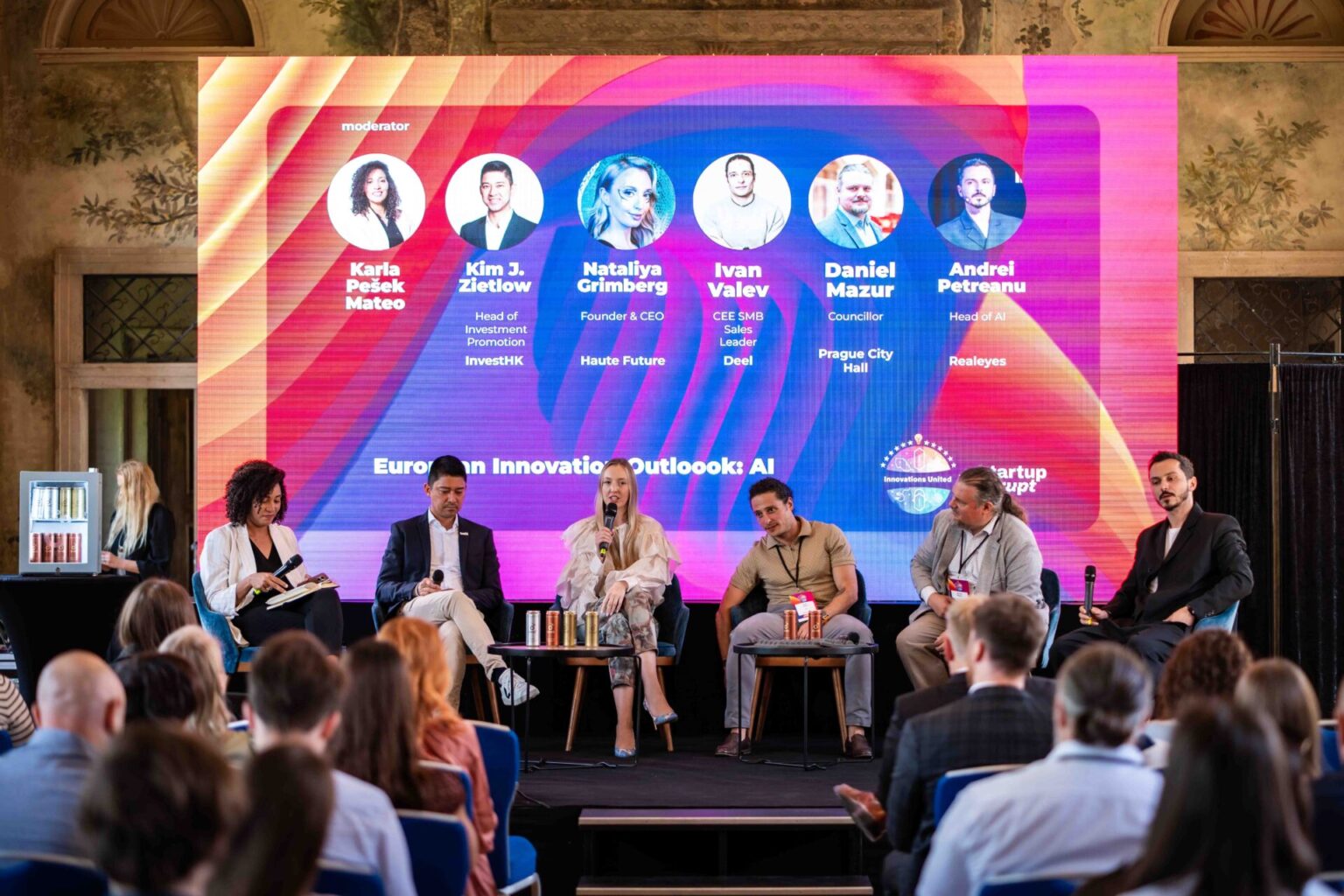
Innovations United 2026 brought founders, investors, executives and policymakers together in Prague to discuss AI, communication, resilience, cybersecurity, sustainable technology and startup investment.
Innovations United 2026: Building a More Innovative, Resilient and Human-Centered Future
Artificial intelligence is no longer only a tool for generating text, images or presentations. It is becoming part of corporate decision-making, customer communication, public administration, healthcare, security and critical infrastructure.
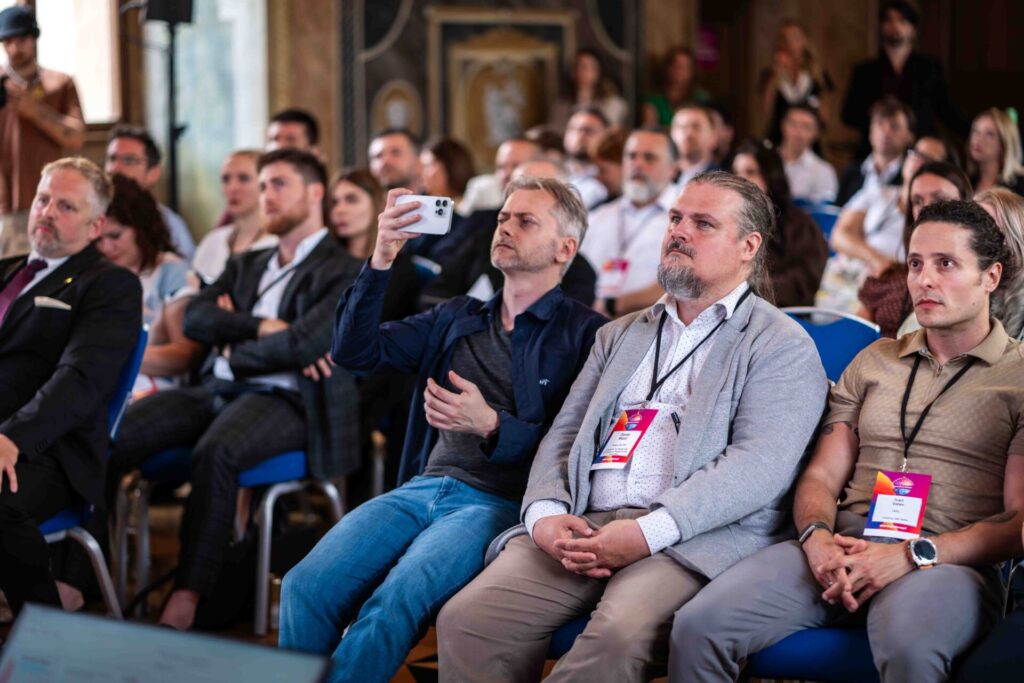
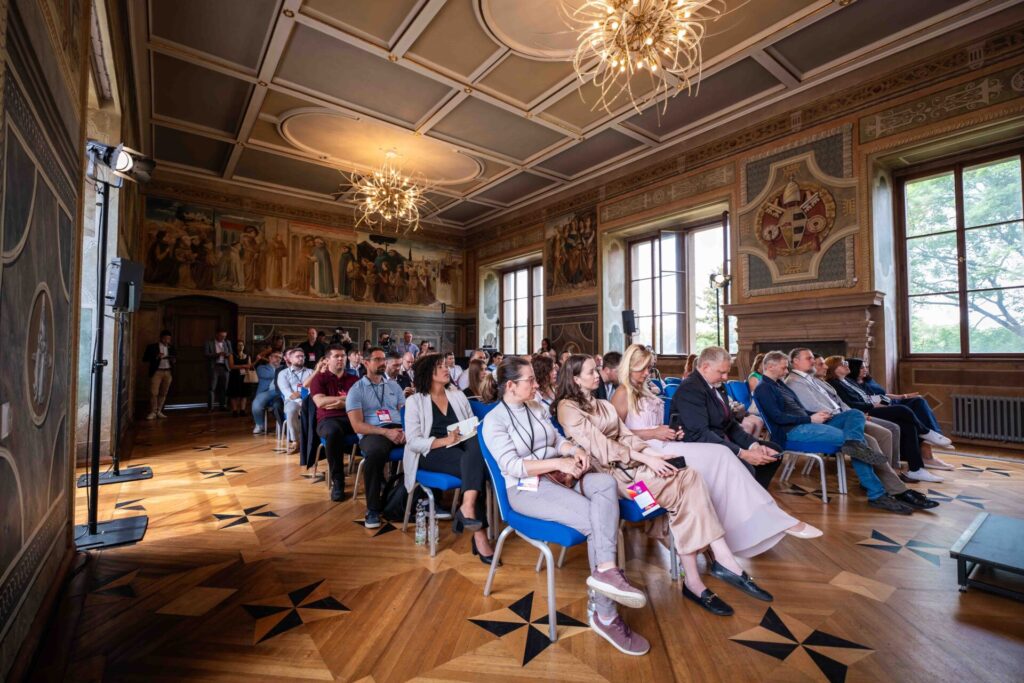
This transformation shaped the fifth edition of Innovations United, organised by Startup Disrupt on 2–3 June 2026 at the historic Martinic Palace in the Prague Castle area.
The event attracted 890 registrations across a programme connecting artificial intelligence, the future of communication, defense, resilience, female leadership, cybersecurity, sustainable innovation and startup investment.
Founders, investors, executives, policymakers and technology experts came together around one central question:
How can we turn innovation into practical value while preserving trust, accountability and human agency?
Connecting the Private and Public Sectors
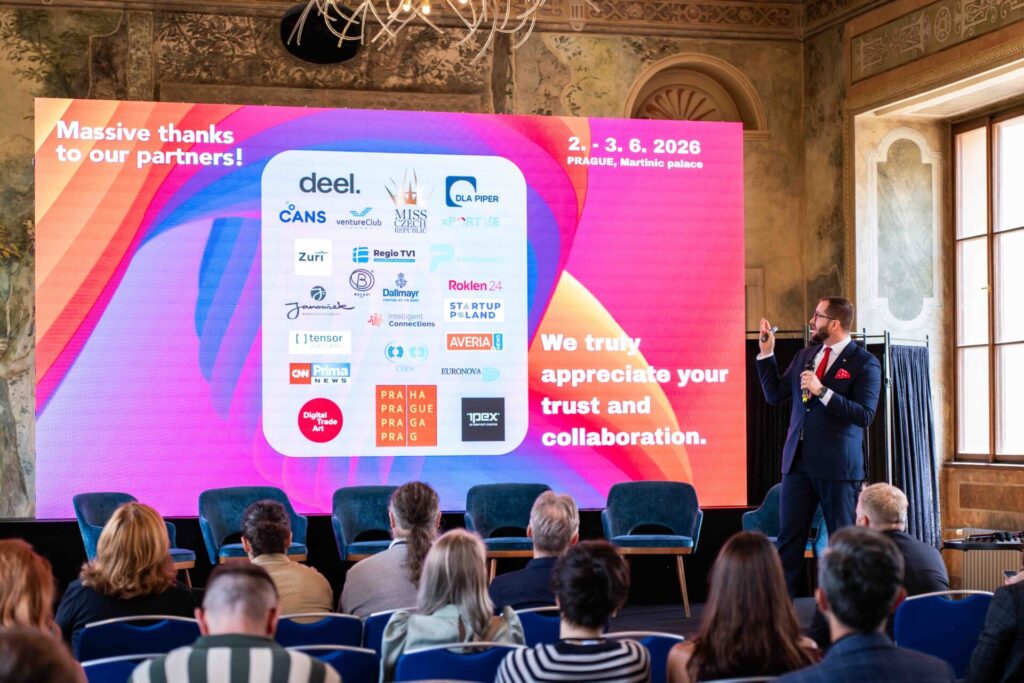
Opening the conference, Patrik Juránek, founder of Startup Disrupt, highlighted the importance of cooperation between businesses and public institutions.
“An innovative society cannot be built by private businesses alone. We need to create spaces where companies, startups and public institutions can collaborate and support each other.”
The opening programme featured Karel Havlíček, First Deputy Prime Minister and Minister of Industry and Trade, and Daniel Mazur, Prague City Councillor for ICT, Smart City, Science, Research and Innovation.
Havlíček focused on the role of the state in creating conditions for economic growth, innovation and entrepreneurship. Mazur presented Prague as a city that is gradually introducing new technologies into public administration while maintaining a responsible approach to regulation and public accountability.
The conference was hosted by Stacey Quackenbush, co-founder and CEO of Hive Three, whose energy and perspective connected the individual blocks throughout the day.
AI Is Moving Beyond Content Generation
The first major block explored the next phase of artificial intelligence.
The discussion moved beyond generic AI tools and focused on how companies can connect data, expertise and workflows into coherent intelligence layers.
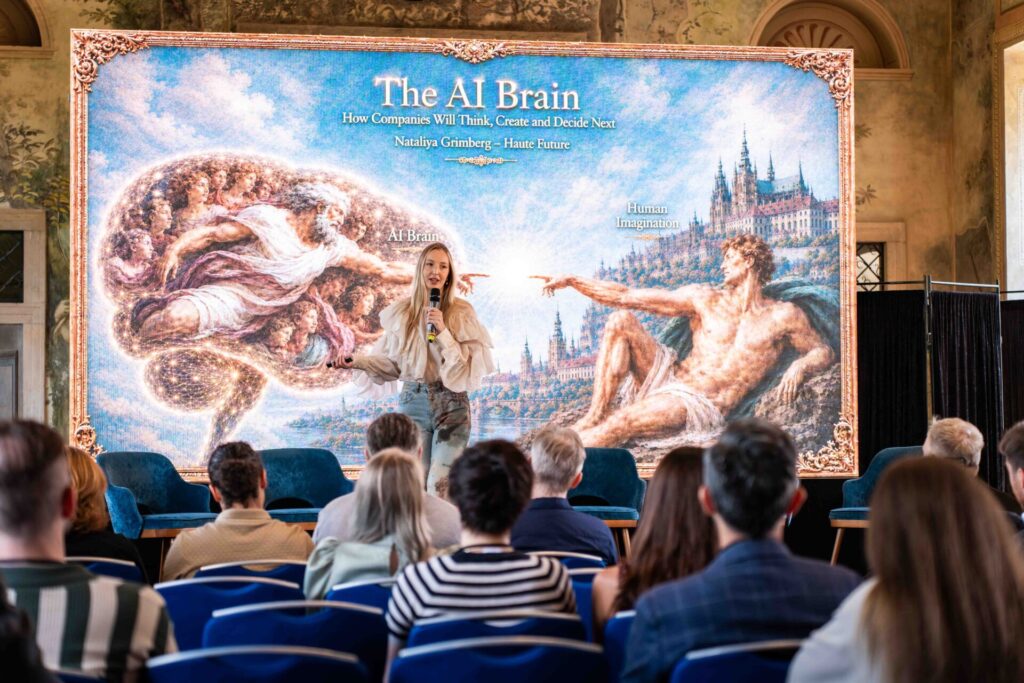
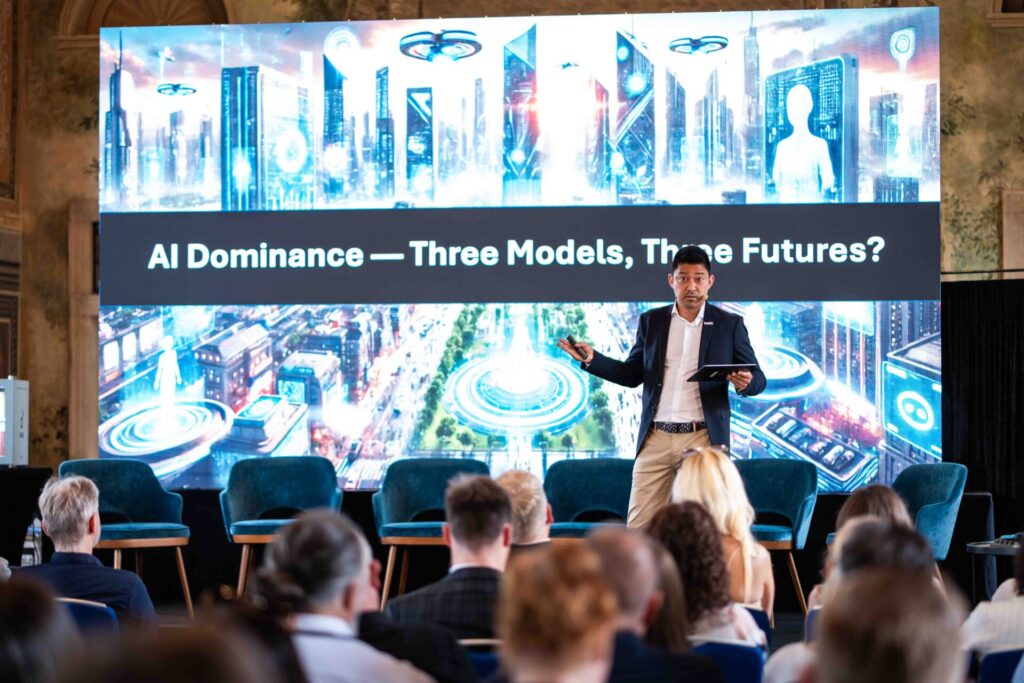
Nataliya Grimberg, founder and CEO of Haute Future, described the rise of industry-specific AI systems. Kim Zietlow of InvestHK explored the global technology race between the United States, China and Europe. Ivan Valev of Deel challenged the outdated perception of Central and Eastern Europe as merely a source of affordable talent.
During the European Innovation Outlook panel, the speakers addressed one of the most important questions facing Europe:
Where can Europe realistically win in AI?
The answer was not to copy the United States or China. Europe’s opportunity lies in trusted applications, industrial expertise, strong research capabilities and vertical solutions designed around real business problems.
The Future of Communication Is More Relevant, Not Louder
The communication block examined how AI is changing marketing, customer support and brand-building.
The core message was simple: companies should not automate processes merely because they can. Automation needs to solve a real customer problem.
Voicebots, chatbots and AI assistants can reduce friction and create value. Poorly designed systems, however, can scale mistakes and damage trust faster than traditional customer service ever could.
The speakers also explored a broader shift: communication is no longer fully controlled by brands themselves. Increasingly, customers ask AI tools to compare companies, summarise products and recommend services.
As a result, trusted information, authenticity and consistent brand identity are becoming strategic assets.
Human Infrastructure Still Matters
One of the most distinctive keynotes came from Stacey Quackenbush, who focused on three things AI cannot truly do:
Belong. Vouch. Care.
AI can process information, automate workflows and scale decisions. But it cannot carry the consequences of letting down a community. It cannot put its own reputation at risk. It does not have a future genuinely connected to another person.
Her message was clear: as AI becomes more powerful, human relationships and accountability will not become obsolete. They will become more valuable.
Preparedness Is a Leadership Responsibility
The resilience block shifted the discussion from future opportunities to present-day risks.
Speakers examined how companies and institutions would respond to supply-chain disruption, cyberattacks, energy shortages or a blackout.
A crisis plan stored in a drawer is not enough.
Organisations need to know who makes decisions, which operations are essential, how communication will work if digital systems fail and how responsibilities are distributed under pressure.
The same principle applied to cybersecurity.
The final conference block emphasised that cyber resilience is no longer solely an IT department issue. Boards and senior executives need to understand their critical assets, map operational risks, train their teams and maintain realistic response plans.
From Sustainable Aviation to Local Energy Systems
The Sustainable Future block introduced solutions designed to improve mobility and energy resilience.
Michal Illich, founder of Zuri, presented a vertical take-off and landing aircraft designed for regional transport, cargo and selected dual-use applications.
Jakub Lustyk, founder of Treetino, explored the future of microgrids and introduced energy-generating structures combining solar panels and wind turbines.
Both presentations highlighted the same underlying principle:
Innovation needs to create a practical economic case, not only a compelling vision.
From Conference to Investment
The programme culminated in the Venture Club Disrupt Awards, where five selected startups pitched their solutions in front of investors and industry experts.
The finalists were:
- Deep Med Chem
- NanoFlexion
- CoinGarage
- Treetino
- Pangea.ai
Congratulations to the winners:
🥇 Pangea.ai — Disruptor of the Year 2026
🥈 NanoFlexion
🥉 Deep Med Chem
Represented by Marek Miltner, Pangea.ai is building an AI-powered interface for analysing the physical world through geospatial data and real-world risk intelligence.
The Future Is Designed Through Decisions
Innovations United 2026 demonstrated that the next decade will not be defined only by larger AI models, faster chips or greater investment.
It will also depend on our ability to turn technology into practical value, protect trust, strengthen resilience and maintain human responsibility.
The future does not simply happen to us.
It is designed, tested and built through the decisions we make today.


