
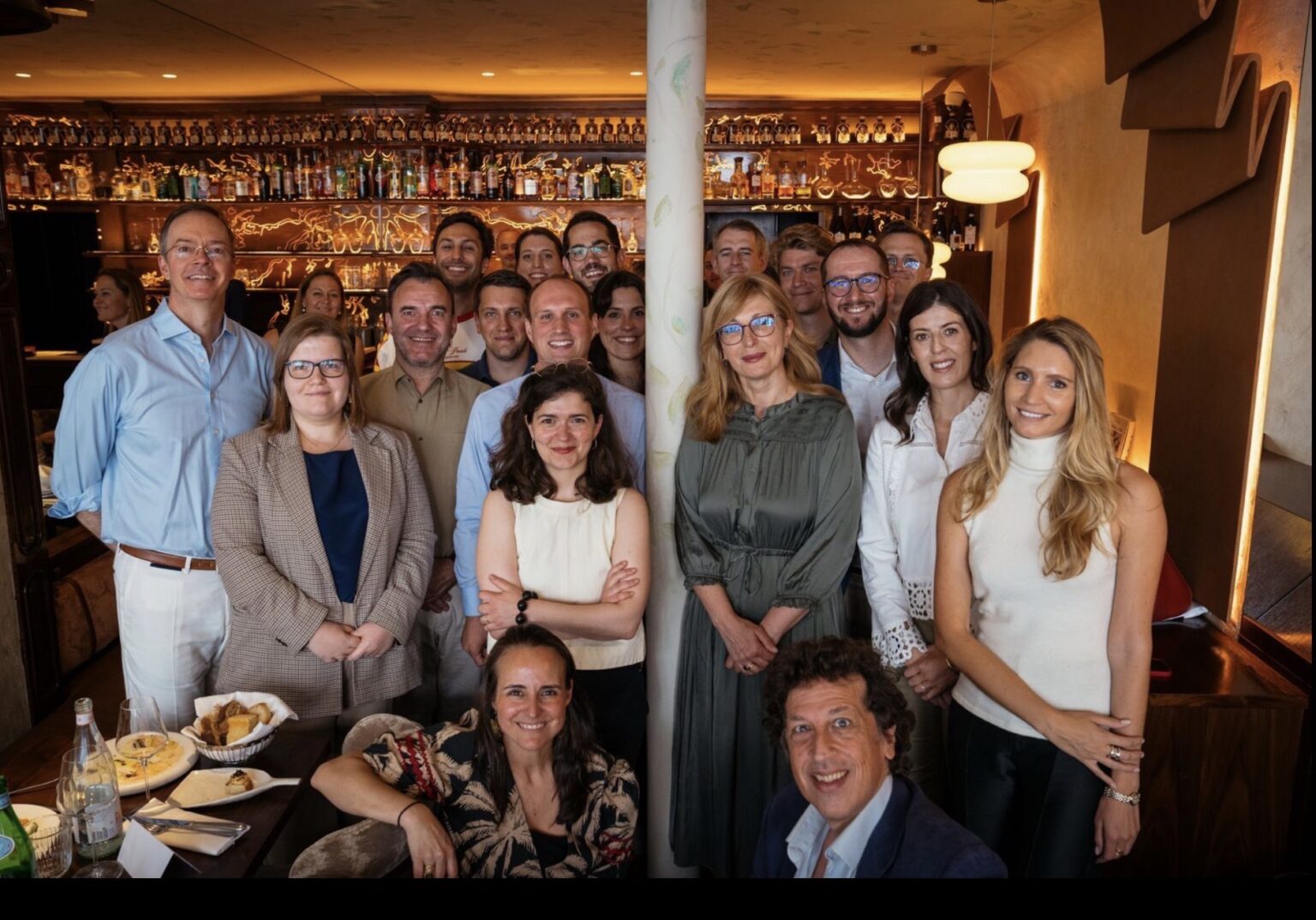
Reflections from an invitation-only discussion with founders, investors and startup ecosystem leaders during VivaTech 2026 in Paris. The reflections below represent my personal takeaways from the discussion and should not be attributed to any individual participant.
Europe has never lacked great founders.
It has never lacked brilliant engineers, world-class universities, groundbreaking research or ambitious entrepreneurs.
What Europe has lacked is the ability to consistently transform these advantages into global technology leaders.
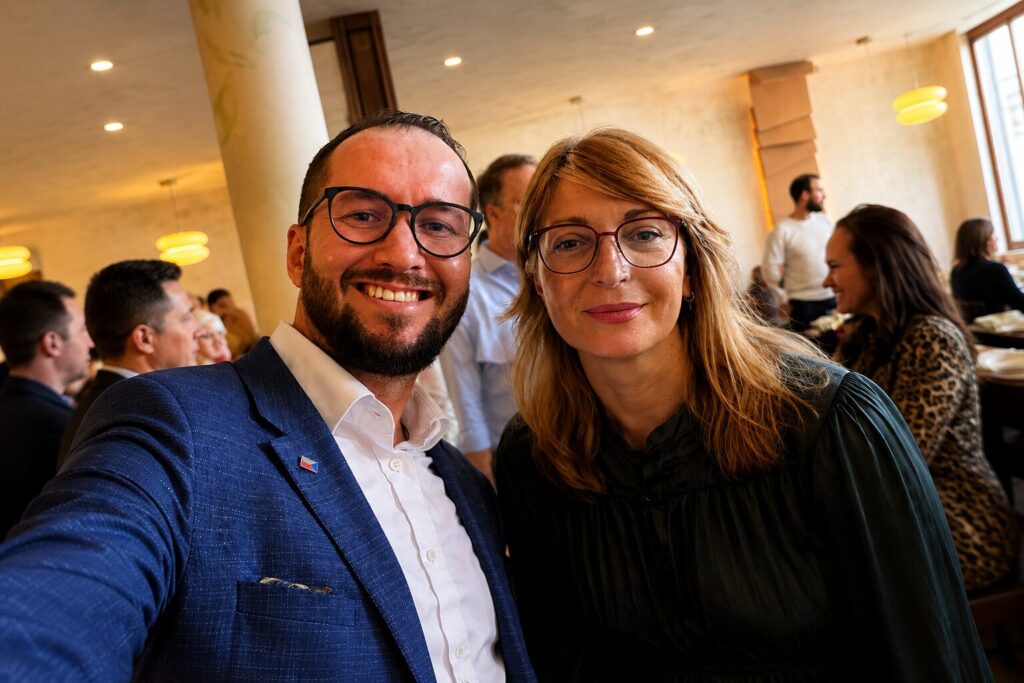
That challenge was at the center of an invitation-only lunch discussion during VivaTech 2026 in Paris, where our founder Patrik Juránek joined European Commissioner for Startups, Research and Innovation Ekaterina Zaharieva, representatives from EQT, Allied for Startups, the European Startup Network, leading venture capital firms, founders, and startup associations from across Europe.
The objective was straightforward but ambitious:
How do we make Europe the best place not only to start a company—but to scale one?
A Different Tone from Brussels
One thing became immediately clear.
The conversation in Brussels has changed.
Instead of discussing whether startups matter, policymakers are now asking how Europe can help them grow faster.
Participants discussed several initiatives introduced over the past 18 months, including the Startup & Scaleup Strategy, the proposed 28th Regime, the Scaleup Europe Fund and efforts to simplify Europe’s innovation framework.
One theme returned throughout the discussion: speed matters.
Europe cannot afford years of legislative discussions while its fastest-growing companies relocate elsewhere.

The €5 Billion Scaleup Europe Fund
One of the highlights of the discussion was learning more about the newly announced Scaleup Europe Fund and its intended role in strengthening Europe’s scaleup ecosystem.
The ambition is significant.
The fund aims to reach €5 billion, with an initial €2.5 billion already committed and additional capital being raised from private investors.
Rather than replacing venture capital, the fund is designed to address Europe’s biggest financing gap:
late-stage growth capital.
Investment tickets are expected to range from approximately €30 million to €300 million, supporting companies from Series B through pre-IPO.
Its mission is simple:
Keep Europe’s most promising scaleups growing from Europe instead of forcing them to seek growth capital elsewhere.
One important perspective shared during the discussion was that the fund should remain commercially driven, selecting companies based on their potential to compete globally.
Europe needs globally competitive companies—not geographically balanced mediocrity.
Speed Is Becoming Europe’s Biggest Competitive Issue
Perhaps the strongest theme throughout the discussion was not regulation.
It was speed.
Founders don’t wait.
Markets don’t wait.
Artificial intelligence certainly doesn’t wait.
Several participants noted that American investors can issue term sheets within days, while European processes often take months.
One founder shared a sobering reality:
Some startups simply do not have six months left to survive while waiting for funding decisions.
The challenge is no longer whether Europe supports innovation.
It is whether Europe can support innovation fast enough.
AI Infrastructure and Digital Sovereignty
Another major topic was artificial intelligence infrastructure.
Building competitive AI companies requires enormous computing power.
The discussion explored Europe’s dependence on non-European cloud infrastructure, semiconductors and AI platforms.
One perspective discussed during the session was that Europe should strengthen its own technological capabilities while remaining globally connected.
- build stronger European capabilities,
- encourage public procurement of European innovation,
- improve awareness of European technology providers,
- while remaining globally connected.
Sovereignty should strengthen competitiveness—not become protectionism.
Europe’s Real Problem May Not Be Investors
One observation particularly stood out.
One perspective raised during the discussion was that Europe may focus too much on investor risk aversion, while overlooking the role of large corporations as early adopters of innovation.
Another recurring point was that Europe’s corporations may, in some cases, be an even greater bottleneck than access to capital.
Large organizations frequently prefer buying established technologies rather than testing innovative European solutions.
If Europe’s largest companies become earlier customers of European startups, they could accelerate growth far beyond what public funding alone can achieve.
Capital is important.
Customers are equally important.
Exits Still Matter
Another fascinating debate focused on exits.
Europe has become significantly better at creating startups.
Scaling remains harder.
But exiting remains perhaps the greatest structural weakness.
Should Europe build a stronger pan-European public market?
Should more institutional investors allocate capital to growth-stage companies?
Can pension funds become more active in venture capital?
These questions remain open.
Yet there was broad agreement that Europe needs deeper capital markets if it wants to retain technology leaders over the long term.
My Takeaways
Leaving the meeting, I felt both optimistic and realistic.
Optimistic because startup policy has clearly become a strategic priority for Europe.
Realistic because strategies alone do not create unicorns.
Execution does.
If Europe wants to compete globally, several priorities seem unavoidable:
- simplify cross-border entrepreneurship,
- accelerate access to growth capital,
- improve public procurement of innovative technologies,
- deepen European capital markets,
- increase AI infrastructure capacity,
- and perhaps most importantly…
move faster.
Why This Matters
Europe is entering a decisive decade.
Artificial intelligence, quantum technologies, defence innovation, cybersecurity and deep tech will shape global competitiveness.
Whether Europe’s most ambitious founders build these companies from Prague, Paris, Stockholm or Berlin—or eventually relocate elsewhere—will influence Europe’s economy for decades.
As someone working closely with founders, investors and policymakers through Startup Disrupt, I believe these conversations are essential.
Not because policy alone creates innovation.
But because innovation thrives when entrepreneurs, investors and governments work toward the same objective.
Europe has the talent.
Europe has the research.
Europe increasingly has the capital.
Now comes the hardest part:
Turning those ingredients into the next generation of global technology leaders.
Thank you to Allied for Startups and everyone who contributed to an open and thoughtful discussion. Conversations like these help bridge the gap between founders, investors and policymakers across Europe.


